Plain options, no pressure
A few quick answers help us understand your home, so we can give you a clear, upfront quote for Majestic Fireplace Repair Mission

The brand still sells both in volume, so the fireplaces we open under this name range from a 50-inch open wood firebox to a sealed gas unit run from a phone app. Chimney Sweep Mission services each kind, and the sections below explain how the two differ, what goes wrong on each, and when an older unit is worth keeping.
The wood line is built around big, fully refractory-lined fireboxes. The Biltmore, sold in 36, 42, and 50-inch sizes, is billed as the largest wood-burning fireplace in the industry, and the Royalton, Sovereign, Ashland, WarmMajic II, and see-through Designer models fill out the range. Their brick-pattern panels have steel mesh moulded inside them, and they ship with a damper, a tilt-up grate, a curtain mesh spark screen, and outside air kits on several models.
A wood visit on one of these is a chimney job as much as a fireplace job. Each model is listed with a specific chimney system, the 11-inch SL1100 pipe on the Biltmore and an 8-inch system on the Royalton, and only that pipe may be used. We sweep, inspect the refractory and the damper, and check every chimney section and the cap for corrosion or separation.
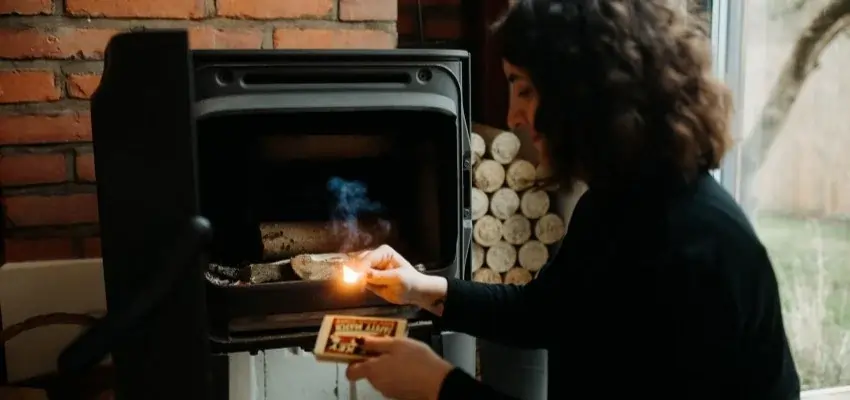
The gas line is a separate world. The Meridian and Meridian Platinum burn around split logs, run on IntelliFire Touch ignition with an optional Wi-Fi module and fan kit, and take brick panels or reflective black glass. The Echelon II comes single-sided or see-through, and the Jade, Quartz, Mercury, corner, and multi-sided units cover the rest. One gas series carries the name Marquis II; it is a model line of this brand and has nothing to do with the separate Marquis label. A gas visit is ignition, burner, logs, glass gasket, and vent.
The complaints on these fireplaces follow the split above, and each one has a usual cause.
Smoke rolls out of a large wood opening at lighting - a cold chimney in an outside chase, a damper only half open, or outside air kits closed off during a renovation.
Cracks across the brick panels - the moulded-in mesh holds a cracked panel together, so surface cracking is tolerable; loose pieces or exposed steel are not.
Gas log set in a wood firebox burns sooty - the side knockouts allow a gas line in, but only a vented log set listed for that firebox belongs there, with the damper clamped open.
Meridian clicks and will not light - the IntelliFire Touch module locked out on a dirty pilot, low batteries, or lost pairing with its remote or wall switch.
App no longer reaches the fireplace - the Wi-Fi module dropped off the home network after a router change and needs re-pairing.
Power-vented unit dead during an outage - the vent fan has to prove before gas flows, so these units cannot run without electricity.
Majestic wood units in Mission need most of their attention at the start and end of the burning season. A sweep before the first fire clears creosote and anything that nested over summer, and a quick look up the flue on a bright day tells you whether the cap screen is clear. A chimney inside an outside chase starts cold, so a few sheets of newspaper burned near the damper to warm the flue before the kindling goes in saves a room full of smoke. In spring, close the damper firmly to stop summer downdrafts from carrying a creosote smell into the room.
The gas units are simpler but have their own calendar. Fresh batteries in the remote and the backup tray each autumn prevent most no-light calls in the first cold snap. A direct-vent termination cap on a low wall drifts over in heavy snow and should be cleared by hand. Keep a carbon monoxide alarm on each floor with a fireplace, and treat an alarm or a sooty glass panel as a reason to switch off and call.
Several of the brand's wood models have left the catalogue, the 44-inch Biltmore among them, yet a discontinued badge says little about whether a particular firebox can carry on. What decides it is the steel, the panels, and the pipe. Brick-pattern panels are still produced for many past models, and some older Designer units accept back panels shared with sister brands, so a cracked liner is usually a parts order rather than a verdict.
The harder cases are structural. A firebox floor eaten by water from a failed chase top, side walls bowed by years of roaring fires, or a chimney system whose listed sections are no longer sold all limit what a repair can achieve. When we find one of those, we explain what fixing it would involve and what a vented gas insert or a new firebox would involve instead, then leave the choice with you. Kept swept, dry, and on its original pipe, an open wood fireplace from this maker serves for decades.
Tell us whether the fireplace burns wood or gas and send a photo of the rating plate. On wood units it is inside the firebox or behind the screen; on gas units it is behind the lower front. Chimney Sweep Mission technicians are licensed for gas work and insured for both. The first visit is a sweep and structural inspection on wood, or an ignition, burner, and vent check on gas.
Call (778) 745-4769 to book, or contact us with the plate photo and a line about the symptom. Majestic owners across Mission get a reply with an appointment time and a note of any parts to order.
Flue last swept long ago? Chimney Cleaning in Mission
Chimney Sweep visits that leave Mission living rooms clean
What's included in Chimney Sweep Services around Mission?
What Fireplace Experts check in your Mission chimney
Logs lifted, embers reset: Gas Fireplace Cleaning near Mission
Yearly Gas Fireplace Maintenance in Mission, before the cold arrives