A few quick answers help us understand your home, so we can give you a clear, upfront quote for Flue Cleaning Mission
From the street, most chimneys look fine. The trouble, when there is any, usually sits inside the flue or at the very top where nobody looks: dark crusts of buildup, a cracked tile, a nest, a cap loosened by the wind. If you found this page by looking up “flue cleaning”, here is what owners in Mission should know about flue cleaning, explained clearly and without exaggeration so you can decide what your chimney needs.
Soot is dry carbon and creosote is a tar-based wood smoke residue, and telling them apart helps us work out what is going on with the appliance. Soot wipes off on a fingertip and falls easily under a brush. When we find heavy soot in a flue serving a gas furnace, boiler or fireplace, we take it as a sign the burner may need attention from a qualified gas technician. Creosote, by contrast, tells us how the wood fires have been run: flaky deposits suggest reasonably hot burning, while sticky or glassy layers point to cool, smoky fires or firewood that was not dry enough.
The obvious signs are noise, smoke and flames at the top, but the ones we look for are what a fire leaves behind. Creosote that has burned swells into a light, porous crust that looks a little like charcoal sponge. Clay tiles crack or shift, metal liners and caps can buckle or turn blue, and the mortar near the top may show heat damage. We sometimes find these marks in chimneys whose owners had no idea anything happened, because a slow fire can burn out on its own. That is why a camera inspection is the usual next step whenever there is any doubt about a past fire.
Smoke spills in when the draft is weaker than the push of the fire, and we usually trace it to one of a few causes. In tight, well-sealed houses, exhaust fans and dryers create enough suction that the chimney becomes an air intake instead of an exhaust. Short chimneys, nearby trees or a taller roofline beside the stack can disturb the airflow at the top. Inside the flue, heavy creosote, a nest or fallen debris narrows the path. Sometimes the fireplace opening is simply too large for the flue. Finding which one applies takes a look from both ends, and the fix ranges from a habit change to a repair.
Glazed creosote comes off with tools and time, since an ordinary brush glides over it like a broom on ice. We describe creosote in three stages: a loose, sooty layer that brushes away, a crunchy, flaky layer that needs stiffer heads, and a glossy third stage that clings to the liner like candy coating. For that last stage we use rotary heads with chains or cutting blades, spun on a drill and matched carefully to the liner so we do not damage it. Chemical modifiers help too, turning the glaze into a brittle crust we can sweep out later. Each method has limits, so we explain them first.
On our visits the flue, smoke chamber, damper and firebox all get cleaned, working along the path of the smoke from the hearth up to the cap. We protect the floor and nearby furniture, seal the opening around our vacuum hose so dust stays contained, then work the flue with rods and a brush matched to the liner: stiff wire for clay tile, softer poly for stainless steel. The smoke chamber above the damper gets hand tools, because creosote clings to its sloped walls. Before and after, we look at the flue condition, often with a camera. At Chimney Sweep Mission, the visit ends with a short walkthrough of what came out, how heavy it was and anything we would keep an eye on.
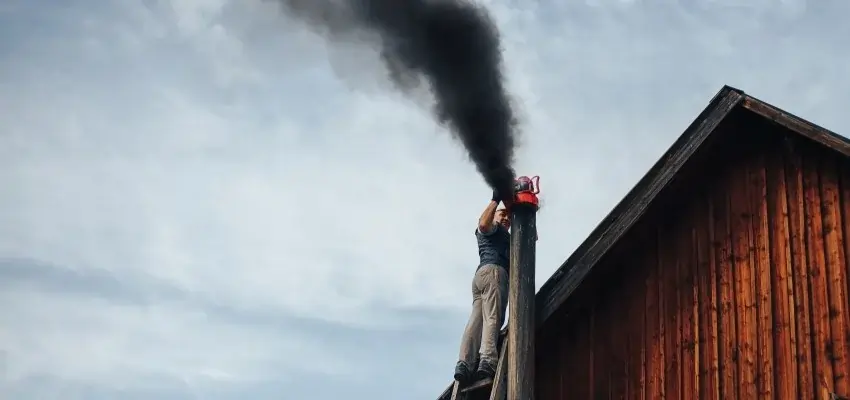
Oil burners do not leave creosote, but they can produce soot and a flaky scale, especially when the burner is out of adjustment. Their exhaust is also acidic and moist, which can wear down masonry flues and unlined chimneys over time, so debris often collects at the base. These flues are commonly checked and cleaned once a year, often timed with the furnace or boiler service. The burner itself should be serviced by a qualified heating technician. A “flue cleaning” visit for an oil appliance focuses on removing soot and scale and checking the liner for corrosion.
Yes. A flue narrowed by buildup draws less air through the fire, so the fire burns cooler and smokier, which in turn deposits more creosote. With a stove, you may notice it is harder to reach a good operating temperature, the glass blackens quickly and the room takes longer to warm. Open fireplaces may smoke at the front and struggle to stay lit. After flue cleaning, many owners find fires start more easily and burn more steadily, simply because the draft is back to what the appliance was designed for.
You can handle simple upkeep yourself, but the sweeping is usually a job for a professional, and creosote sweeping logs only loosen some deposits rather than replacing a real cleaning. Safe tasks include removing cold ashes, keeping the hearth clear, looking up the flue with a flashlight when the fire is out and checking the cap from the ground with binoculars. Full sweeping means roof work, brushes matched to the liner and a way to contain soot indoors, and it skips the inspection a trained technician does at the same time. Leave anything involving the liner, masonry or gas parts to professionals.
Choose a chimney company that explains its process clearly, quotes based on your actual chimney and shows you what it finds. A good company asks about the appliance, the number of flues and the roof before giving a price, and tells you what the visit includes. On the day, the technician should protect the room, contain the soot and explain the condition of the flue, ideally with photos. Read recent reviews for comments on tidiness and honesty. Be cautious with a very low advertised price followed by pressure to approve large repairs on the spot, and get a second opinion before major work.
Tell us your address in Mission, what you have noticed and when you are usually home. That is all we need to plan flue cleaning around your schedule. Send the details and the Chimney Sweep Mission team will reply with options and a price.
Flue last swept long ago? Chimney Cleaning in Mission
Chimney Sweep visits that leave Mission living rooms clean
What's included in Chimney Sweep Services around Mission?
What Fireplace Experts check in your Mission chimney
Logs lifted, embers reset: Gas Fireplace Cleaning near Mission
Yearly Gas Fireplace Maintenance in Mission, before the cold arrives