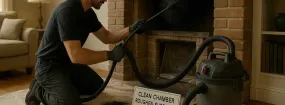
A few quick answers help us understand your home, so we can give you a clear, upfront quote for Fireplace Smoke Chamber Repair Mission
Some fireplace projects start with a wish for a fresh look; others start with a crumbling brick, a stuck damper or a smoky room. Either way, people around Mission who search for “fireplace smoke chamber repair” tend to ask the same practical questions. This page answers them plainly, from what the work involves and how long it takes to how to prepare and what to ask before hiring anyone, so you can plan smoke chamber repair with fewer surprises.
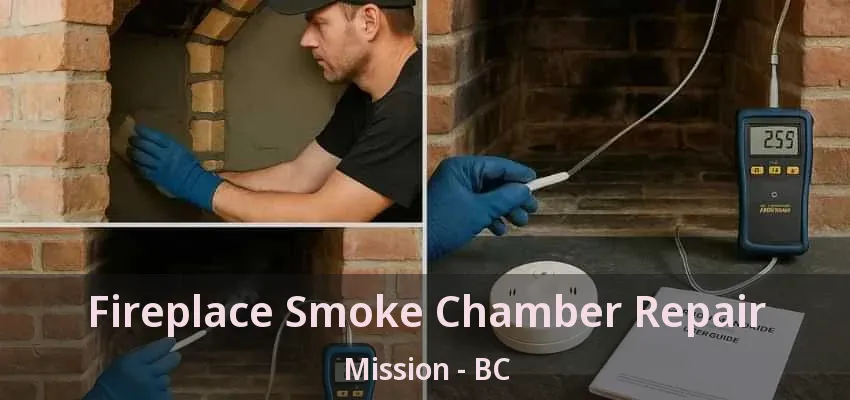
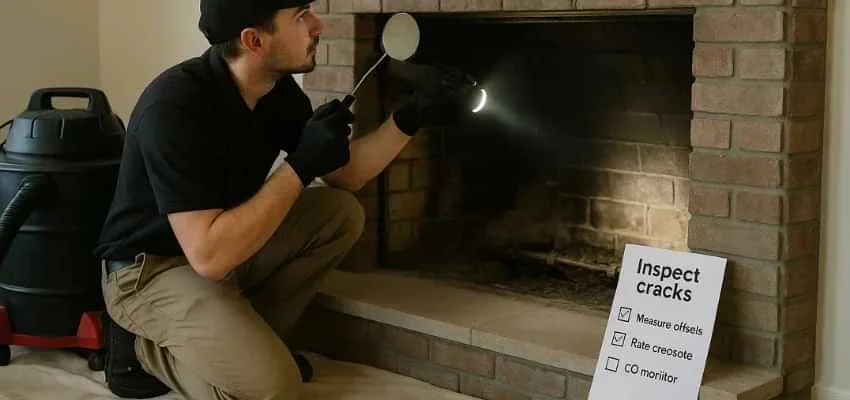
The smoke chamber is the sloped space above the damper that funnels smoke from the wide firebox into the narrower flue. Its walls should be smooth so smoke flows upward without turbulence. In many older fireplaces, the chamber was left with stepped bricks and rough mortar, and over time that mortar can erode or crack. The result can be poor draft, smoke in the room and creosote building up on rough surfaces, and gaps may let heat reach nearby framing. Because it is hidden, the smoke chamber is usually checked with a light or camera during an inspection.
The most common signs are smoke drifting into the room, especially at the start of a fire, a smoky smell that lingers when the fireplace is off and bits of mortar or brick landing on the smoke shelf or in the firebox. Heavy creosote above the damper, visible with a flashlight, is another clue. An inspection report may also flag a corbelled or unparged chamber. Because the area is hidden, most problems are found with a camera during a chimney inspection. If you are researching “fireplace smoke chamber repair” after a report like that, ask for the photos or video so you can see the condition yourself.
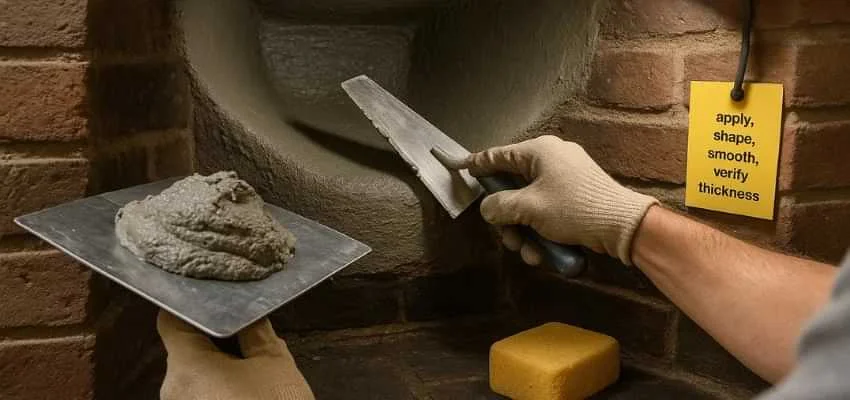
A damaged smoke chamber is usually repaired by cleaning it, resetting any loose bricks and coating the walls with a heat-resistant mortar, a process called parging. The coating fills the steps between bricks and seals cracks, leaving a smooth, sloped surface that guides smoke into the flue. The work is done from inside the fireplace and from above with specialized trowels and tools, and the result is checked with a camera. Because the surfaces must be clean for the coating to bond, a sweep comes first. The new surface then needs time to cure before the fireplace is used.
No, they treat different sections. The smoke chamber sits between the damper and the flue, while a chimney liner runs up the flue itself to the top of the chimney. A cracked flue tile or an unlined flue calls for relining; rough or eroded chamber walls call for parging or rebuilding the chamber. Some homes need both, and doing them together saves a second setup. An inspection with a camera shows which parts are affected. When you request smoke chamber repair quotes, check that each one says clearly which section is included, so you are comparing the same work.
Small repairs, such as replacing a few firebricks or fixing a damper, often take a single visit, while refacing, mantel work or a conversion can take several working days spread over a week or two. Masonry and mortar need time to cure before the fireplace is used, and some finishes must set before the next layer goes on. Ordering stone, tile, a mantel or a gas insert can add weeks before work starts. Ask for a schedule that shows working days, waiting time for curing or materials and the earliest date you can light a fire again.
Sometimes, and the deciding factors are gas, structure and venting. Cosmetic work on the outside of the fireplace rarely triggers a permit. Connecting a gas line, installing an insert with a new liner or rebuilding part of the firebox or chimney often does, depending on the rules where the house sits. Whoever does the work should know which applies and say so clearly in the quote. If a permit is needed, ask who will apply, who will be present for any inspection and whether the price includes it. Skipping this step can cause trouble later, for example when you sell the house.
Clear the area around the fireplace well beyond the hearth: furniture, rugs, artwork above the mantel, screens, tools and anything on the mantel shelf. Stop using the fireplace a day or two before so the firebox is cold, and remove ashes if the crew asks you to. Plan a clear path from the door to the room and a spot to stage materials, such as a garage or driveway. If you are choosing finishes, have samples approved before the start date. Keep pets and children away from the work area and agree on where the crew can wash tools.
Most of what keeps a fireplace looking and working well happens between our visits. A yearly inspection is the backbone, because it catches mortar joints, damper parts and smoke chamber surfaces before they deteriorate. Day to day, the habits that matter are dry firewood, moderate fires and a hearth kept free of things that can scorch. New surrounds need little beyond gentle cleaning, though natural stone may benefit from occasional sealing if the supplier recommends it. On gas conversions, the yearly check shifts to the burner, ignition and venting. A short note after each visit helps everyone spot trends.
Knowing the area saves time on almost every fireplace job. In older and newer neighborhoods alike, we see the same brick styles, the same original dampers and the same surround materials again and again, so we can often predict what is behind a finish before it comes off. We also know which suppliers stock matching brick, stone and refractory materials and how long their orders take. Projects that need several visits, with curing time in between, run more smoothly when the crew is close by. And if a question comes up after the work, you can reach us directly.
Tell us the days and hours that suit you and we will look for an opening that matches. We confirm the arrival window ahead of time so you can plan your day in Mission. Request a time for smoke chamber repair.
Flue last swept long ago? Chimney Cleaning in Mission
Chimney Sweep visits that leave Mission living rooms clean
What's included in Chimney Sweep Services around Mission?
What Fireplace Experts check in your Mission chimney
Logs lifted, embers reset: Gas Fireplace Cleaning near Mission
Yearly Gas Fireplace Maintenance in Mission, before the cold arrives