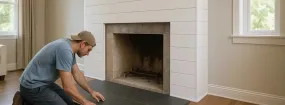
A few quick answers help us understand your home, so we can give you a clear, upfront quote for Fireplace Makeover Services Mission
How long will it take? Can it be done without tearing everything out? When can we light a fire again? These questions come up in almost every conversation we have about fireplace work. For homeowners in Mission who searched for “fireplace makeover services”, we have gathered the answers in one place, with practical notes on fireplace renovation drawn from jobs in homes much like yours.
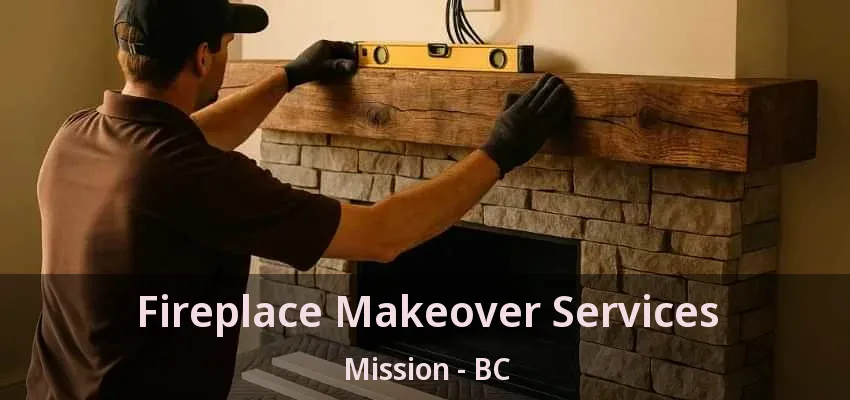
In most homes we see, yes, but the answer comes from inside the fireplace rather than its surface. A dated surround over a healthy firebox and a working damper is a good candidate for improvement. Cracked firebricks, a rough smoke chamber or a rusted damper are worth fixing in their own right, since they affect how safely the fireplace burns. Where we hesitate is when the chimney itself needs major rebuilding, because then the budget conversation changes. We look at the whole system first, explain what we find and let you weigh appearance against function.
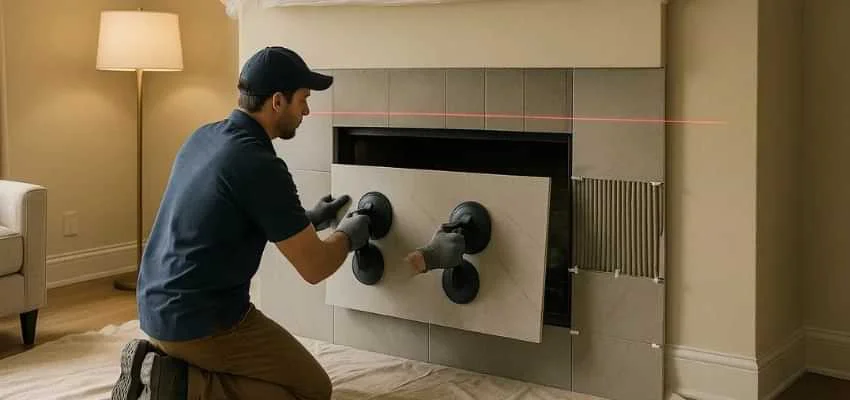
Most surround materials can work, and each one changes the job differently. Stone veneer, real or manufactured, gives depth but adds weight, so we check that the wall and hearth can carry it. Porcelain tile is thin, durable and easy to wipe down, and large-format pieces give a modern look with few grout lines. Thin brick suits traditional rooms without the bulk of full brick. Plaster and limewash refresh existing brick with very little demolition. Whatever you choose, the material closest to the firebox must handle heat, which is where specialty adhesives and mortars come in.
A makeover can be as small as fresh paint on the brick or as large as a new surround, hearth and mantel. Common pieces are refacing with stone, tile or plaster, a new or refinished mantel, a raised or extended hearth, new glass doors and a modern insert or gas conversion. Built-in shelving or lighting on either side often comes into the plan too. People searching for “fireplace makeover services” usually have a look in mind, and the job is turning it into a scope that suits the fireplace, the room and the budget. Any repairs found along the way should come first.
We protect the room with floor coverings, sealed openings and a contained work area, and the setup takes time on purpose because masonry dust travels. The floor is covered from the door to the hearth, plastic is taped around the fireplace opening and, for messy demolition, we build a small enclosure so dust stays in one spot. Cutting is done with dust collection where the tools allow, and mixing happens outside or on protected ground. At the end of each day we vacuum and tidy. Some fine dust can still escape on a demolition day, but it should be minor.
When we price fireplace work, we are estimating labor hours, materials and risk. Labor depends on how much needs to come apart, how tight the space is and whether the job calls for skilled masonry, carpentry or gas fitting. Materials range from inexpensive tile to heavy natural stone that needs extra support. Risk is the unknown: an old surround can hide damaged brick or framing that has to be fixed before anything new goes on. We explain up front how any extra work would be handled and priced, so a surprise behind the wall does not become a surprise on the invoice.
Small repairs, such as replacing a few firebricks or fixing a damper, often take a single visit, while refacing, mantel work or a conversion can take several working days spread over a week or two. Masonry and mortar need time to cure before the fireplace is used, and some finishes must set before the next layer goes on. Ordering stone, tile, a mantel or a gas insert can add weeks before work starts. Ask for a schedule that shows working days, waiting time for curing or materials and the earliest date you can light a fire again.
Start with how you use the room and what the fireplace should do in it: be the focal point, blend into a feature wall or frame a TV. Look at the scale of the wall, the ceiling height and the furniture, since a heavy stone surround can overwhelm a small space while a slim tile face can disappear on a tall wall. Collect a few pictures you like and bring samples into the room to see them in your own light. Decide early whether the fuel type will change. A clear plan makes fireplace renovation quotes easier to compare and keeps decisions from piling up mid-project.
It depends on where you live and what the work involves. Purely cosmetic changes, such as painting brick or swapping a mantel shelf, often need no permit, while gas line work, installing a new insert or fireplace, changes to the chimney or structural masonry frequently do. Rules differ from one municipality to the next, so check with your local building department or ask the contractor to confirm. A professional company should know the local requirements and tell you whether it will arrange the permit and inspection or whether that falls to you. Get that answer in writing before work begins.
Compare quotes line by line rather than by the total. Each should describe the same scope: what is removed, what is repaired, what new materials go in and who handles any gas, liner or venting work. Look for the material types, the finish details, protection and cleanup, disposal of old materials and any permit costs. Check how hidden damage would be priced if it turns up. A quote that looks much lower may simply leave out repairs another contractor included. Ask each company to explain anything vague before you decide.
We would rather explain one thing clearly than list ten things you do not need. Ask us what matters for your home in Mission and we will give you a straight reply. Get in touch with Chimney Sweep Mission whenever you are ready.
Flue last swept long ago? Chimney Cleaning in Mission
Chimney Sweep visits that leave Mission living rooms clean
What's included in Chimney Sweep Services around Mission?
What Fireplace Experts check in your Mission chimney
Logs lifted, embers reset: Gas Fireplace Cleaning near Mission
Yearly Gas Fireplace Maintenance in Mission, before the cold arrives