A few quick answers help us understand your home, so we can give you a clear, upfront quote for Fireplace Fixing Services Mission
Advice about wood fires tends to swing between extremes. One neighbor never has the chimney touched, while another is told every hairline crack is a disaster. Neither helps much when you are trying to decide what your own fireplace needs. If you searched for “fireplace fixing services”, the answers here aim for the practical middle, explaining fireplace repair for homes in Mission with enough detail to make a confident decision.
Creosote is unburned fuel: tiny droplets of tar and gas that leave the fire, cool on the way up and stick to the flue walls. We grade it by texture on every job. A light, powdery coat brushes away easily. A thicker, flaky or bubbly layer takes more effort and tells us fires are running cool or the wood is wet. A glossy, glazed coating is the one that concerns us, because it is stubborn to remove and burns intensely if it catches. Where we find heavy deposits, we talk through wood and burning habits, since changing those is what slows the next round of buildup.
Smoke spills when the house wins a tug-of-war with the chimney. A warm chimney pulls air upward; anything that weakens that pull lets smoke roll out of the opening instead. On calls like this we check the damper first, then look up the flue for blockages, then consider the house itself, because range hoods, dryers and tight windows can make the home pull harder than the chimney. Sometimes the opening is simply too large for the flue, or the chimney is too short for nearby rooflines. Each cause has its own fix, from a smoke guard to a taller flue or a better air supply.
The clearest signs a fireplace needs repair are visible damage and changes in how it behaves. Look for cracked or loose firebrick, mortar that crumbles or leaves gaps, rust flakes falling into the firebox, a damper that sticks or will not close, and cracked tiles on the hearth or surround. Smoke drifting into the room, a strong odor in warm weather and water stains near the opening point to trouble too, often higher up in the chimney. Any one of these deserves a closer look before the next fire, and several together usually mean repairs are overdue.
A careful crew stops, shows you what it found and explains the options before going further. Hidden damage is common in fireplace work: removing a few firebricks can reveal heat-damaged backing, and opening the smoke chamber can uncover gaps nobody could see. You should get photos, a clear description and a revised price for the extra work, along with what would happen if you chose to leave it for later. Agree on this process before the job starts, so a “fireplace fixing services” project never grows without your knowledge or consent.
Cracked tiles are replaced one at a time when the base underneath is sound, and that base is the first thing we check. A single crack from a dropped log is a simple swap: we cut out the grout, lift the broken pieces, clean the bed and set a replacement using materials rated for the heat near a fire. Several cracks running in a line usually mean the hearth slab has shifted or the substrate is failing, and swapping tiles alone will not hold. Near the opening we avoid ordinary household tile adhesives, which can break down with heat and leave tiles loose again.
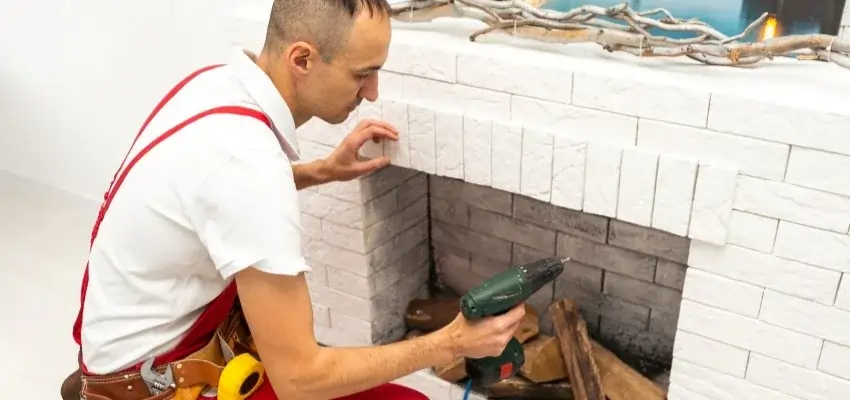
The list of usual repairs is short and fairly predictable, and each item has a standard fix. Inside the firebox, we replace firebrick that has cracked or spalled and repoint joints where mortar has burned away, always with heat-rated refractory materials. At the throat, we free up or replace dampers that have rusted shut or no longer seal. Up top, we refit missing caps and patch cracked crowns before water does more damage. We also see loose hearth tiles, sagging glass door frames and smoke chamber walls too rough to clean properly. Each repair is small on its own; trouble comes from letting several pile up.
Repair quotes differ mostly because of scope, materials and access. Scope is the big one: replacing a damper handle and rebuilding a back wall are very different jobs. Materials matter because refractory mortar, firebrick and heat-rated tile are not the same as everyday masonry supplies, and matching a decades-old surround takes searching. Access matters when the problem sits high in the chimney or above a steep roof. When two quotes are far apart, one company is often fixing only the visible symptom while the other also fixes the cause. Asking each to explain what they found usually clears it up.
Most repair quotes start with an inspection, because the visible damage rarely tells the whole story. After looking at the firebox, damper, flue and chimney exterior, the company writes a scope that lists each repair, the materials it plans to use and any cure time involved. Good quotes separate required work from optional improvements and explain how unexpected damage would be handled. When comparing “fireplace fixing services” offers, make sure each one covers the same items, since a lower figure can simply mean less work. Ask for photos of the problems so you can follow the reasoning yourself.
The questions that reveal the most are about scope and evidence: what is cleaned, what is inspected, how findings are shared and how extra work is priced. It is also reasonable to ask who will do the work, whether they handle masonry repairs themselves and how long any repair would need before the first fire. Asking how they deal with glazed creosote or a stovepipe that has to come apart shows quickly whether they have done it before. A technician who knows wood-burning systems answers each of these in a sentence or two, without hedging or upselling.
Tell us the days and hours that suit you and we will look for an opening that matches. We confirm the arrival window ahead of time so you can plan your day in Mission. Request a time for fireplace repair.
Flue last swept long ago? Chimney Cleaning in Mission
Chimney Sweep visits that leave Mission living rooms clean
What's included in Chimney Sweep Services around Mission?
What Fireplace Experts check in your Mission chimney
Logs lifted, embers reset: Gas Fireplace Cleaning near Mission
Yearly Gas Fireplace Maintenance in Mission, before the cold arrives