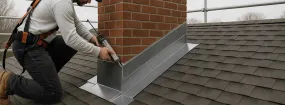
A few quick answers help us understand your home, so we can give you a clear, upfront quote for Chimney Flashing Mission
Our crews hear the same questions on almost every roof and in almost every living room, so we wrote them down. If “chimney flashing” is what brought you here, you will find honest explanations of flashing repair for homes around Mission, the kind a technician would give while pointing at the chimney itself. Some answers deal with safety, some with cost factors and timing, and a few simply explain how the parts of a chimney work together.
Your chimney is most likely leaking at the crown, the flashing, the cap or through porous brick, though the stain rarely appears where the water gets in. Rain that slips past a cracked crown may travel down inside the masonry and show up at the firebox. Flashing leaks tend to stain the ceiling or the attic framing next to the chimney. An uncapped flue lets rain fall straight onto the damper, where it causes rust and a damp smell. Porous brick can wick moisture through the whole stack during long storms. We often test one area at a time with a hose, starting low and working up, so the repair targets the real entry point rather than a guess.
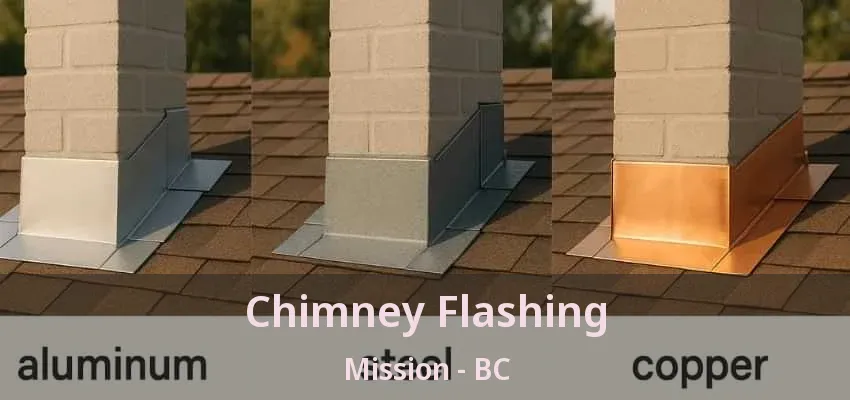
The most common materials are aluminum, galvanized steel, stainless steel and copper, with lead sometimes used for parts shaped around brick. Aluminum is light and easy to bend but should not sit against fresh mortar or concrete without a protective coating, since the alkaline mix can corrode it. Galvanized steel is strong but eventually rusts. Copper and stainless last a long time and suit higher-end roofs. Whatever the choice, the metal should be compatible with the roofing and with any other metal it touches. Ask which material your flashing repair quote includes and why it was chosen.
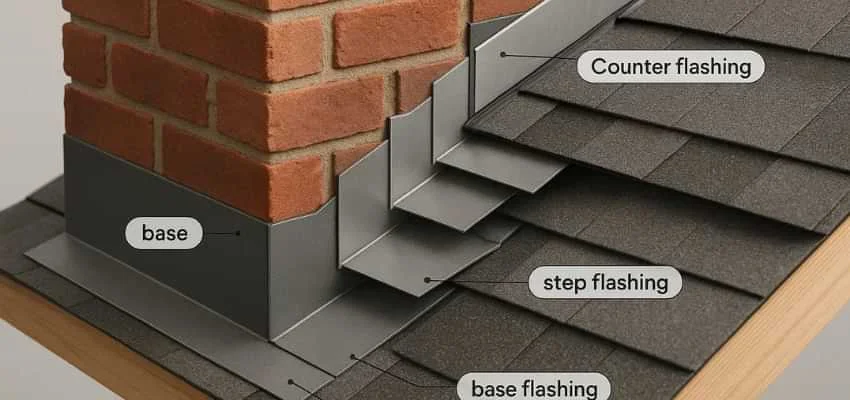
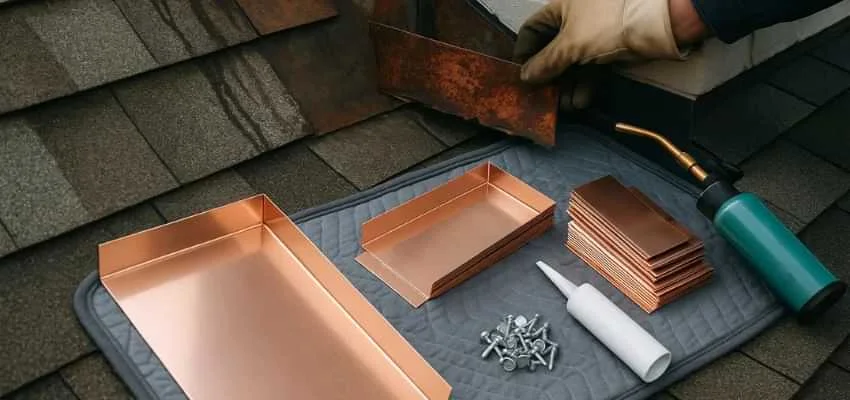
Resealing suits a joint that is sound but tired; replacement is right when the flashing has rusted, was nailed straight into the brick face or depends entirely on a thick smear of roofing tar. A proper replacement starts by removing the old metal and lifting shingles on all sides. New step flashing goes in course by course with the shingles, counter-flashing is let into a cut mortar joint and bent down over it, and the uphill side gets a cricket on wider chimneys so water cannot pool there. Matching the roofing material and color keeps the repair from standing out.
The cost of chimney repair depends mostly on the part being fixed, how much damage there is and how hard the chimney is to reach. A tall chimney on a steep roof needs more equipment and time than a short one on a gentle slope. Materials vary too: stainless steel, copper and custom-sized parts cost more than standard ones, and masonry work depends on how many joints or bricks are involved. Hidden damage found once work begins, such as rotted framing under a chase cover, can add to the total. A written quote that spells out the scope makes comparisons easier.
A common guideline is to have a chimney inspected once a year, and many homeowners schedule it before the colder months when the fireplace sees more use. Yearly checks catch small problems such as a loosening cap, a new crack in the crown or a worn mortar joint before they let water in. It also makes sense to have the chimney looked at after a major storm, a chimney fire, a roof replacement or any change of insert, stove or appliance. Chimneys that are rarely used still need checking, because weather damages them whether or not you light fires.
In most cases, yes. Reusing old flashing under new shingles saves a little time but often shortens the life of the job, because aged metal and sealant may fail long before the new roof does. Replacing it during a reroof is simpler, since the shingles around the chimney are already off. Agree in advance who will do it, the roofer or a chimney company, and how the counter flashing will be set into the mortar joints. People who see “chimney flashing” mentioned in a roofing quote should ask whether it means new metal or simply fresh sealant over the old pieces.
After a repair, the main job is to watch for changes and keep water and debris away from the chimney. Follow any instructions about when the fireplace can be used again, since new mortar or crown material may need time to cure. In the first few rains, check the ceiling and walls near the chimney for stains and look in the firebox for water or debris. Keep tree branches trimmed back from the chimney top and the gutters near it clear. Book a yearly inspection so small wear is caught early, and file the paperwork from the repair for future reference.
Most chimney repairs are not do-it-yourself jobs, mainly because they involve working at height on a roof or inside the flue, where mistakes affect safety. What homeowners can do safely is watch and report: look at the chimney from the ground with binoculars, check the attic and walls near the chimney for stains after rain, keep the hearth area clear and open and close the damper now and then to make sure it moves freely. Leave masonry, flashing, caps, liners, fans and anything connected to a gas appliance to a professional. Patching with roofing tar usually hides a problem rather than fixing it.
Pick the company that gives you specifics. One that knows chimneys asks what yours is made of and what burns in it before giving a figure, and it talks about the cause of a problem rather than just the symptom. On site, it should take photos from the roof and inside the flue, lay out the options and let you decide without pressure. Tidy work matters, since soot and mortar dust travel. Ask how follow-up questions are handled once the job is done, and whether the same crew will come back if something needs a second look.
You do not need to know the right terms before you call. Describe the problem in your own words and we will translate it into a plan for your chimney. Reach us at (778) 745-4769 or ask for a quote online, whichever is easier for you.
Flue last swept long ago? Chimney Cleaning in Mission
Chimney Sweep visits that leave Mission living rooms clean
What's included in Chimney Sweep Services around Mission?
What Fireplace Experts check in your Mission chimney
Logs lifted, embers reset: Gas Fireplace Cleaning near Mission
Yearly Gas Fireplace Maintenance in Mission, before the cold arrives