A few quick answers help us understand your home, so we can give you a clear, upfront quote for Chimney Cover Replacement Mission
Chimney work comes with its own vocabulary: crowns, chases, flashing, flue liners, dampers and more. You do not need to memorize any of it to make a sound decision, but a little background helps. If you looked up “chimney cover replacement”, the answers here turn the jargon into practical advice for homes in Mission and explain what chimney cover installation actually changes, so your conversation with any contractor feels a lot less like guesswork.
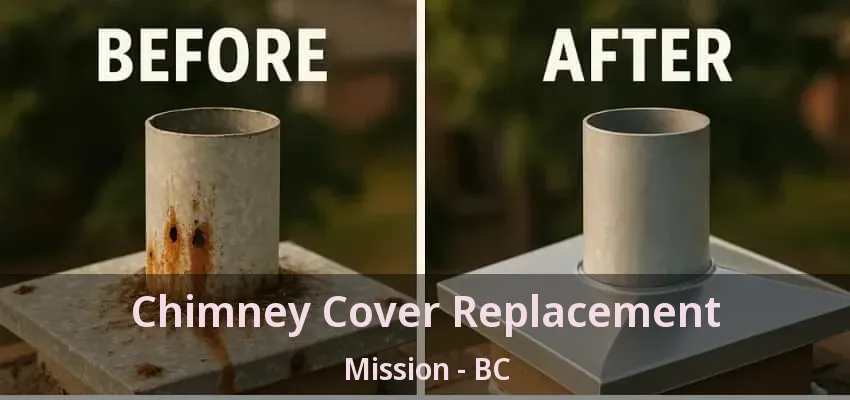
A masonry chimney has more parts than most people realize, and each one can need repair on its own. From the top down, you will usually find:
Inside the house sit the damper, the smoke chamber, the firebox and sometimes an ash dump. Factory-built chimneys swap the brick for a metal flue inside a framed chase with a metal cover on top.
A chimney crown is the slab, usually concrete or mortar, that covers the top of the brickwork around the flue, while a chimney cap is the metal cover that sits over the flue opening itself. The crown seals the masonry and sheds water away from the bricks. The cap keeps rain, animals, leaves and sparks from entering or leaving the flue. Most masonry chimneys need both, because they protect different things. If the crown is cracked, a new cap will not stop water soaking into the bricks, and if the cap is missing, a sound crown will not keep rain out of the flue.
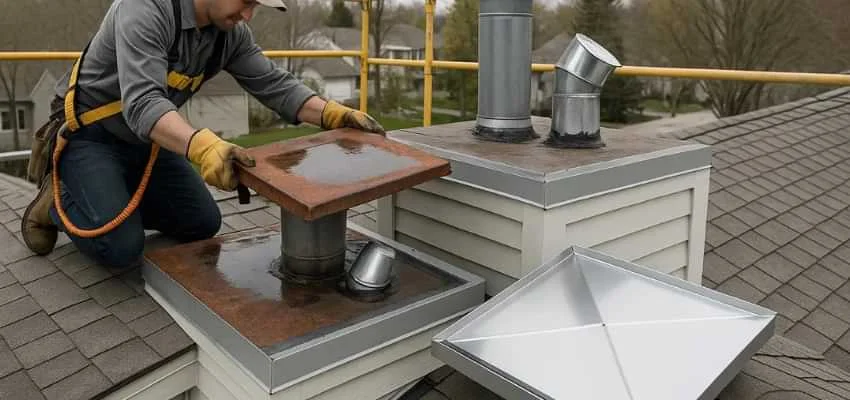
A leaking chimney almost always has one of a few causes: a missing or damaged cap, a cracked crown, failed flashing where the chimney meets the roof, or porous bricks and mortar soaking up rain. On factory-built chimneys, a rusted or flat chase cover is a frequent culprit. Water may show up far from where it enters, running along the flue or the framing before it appears as a stain. Note when the leak happens, whether in every rain or only when wind blows from one direction, and where you see it. Those details help narrow down the source quickly.
Stains, debris and stiff moving parts inside the house are usually the first signs, long before anything looks wrong from the yard. A water mark on the ceiling beside the chimney, a musty smell when it rains, flakes of tile or mortar in the firebox and a damper that has gone stiff all point to something above. Outside, white chalky deposits on brick tell us water is moving through the masonry, and dark streaks below the cap or chase cover suggest rust. Smoke that hangs at the fireplace opening points to a draft problem. We trace each clue back to its source before suggesting any repair.
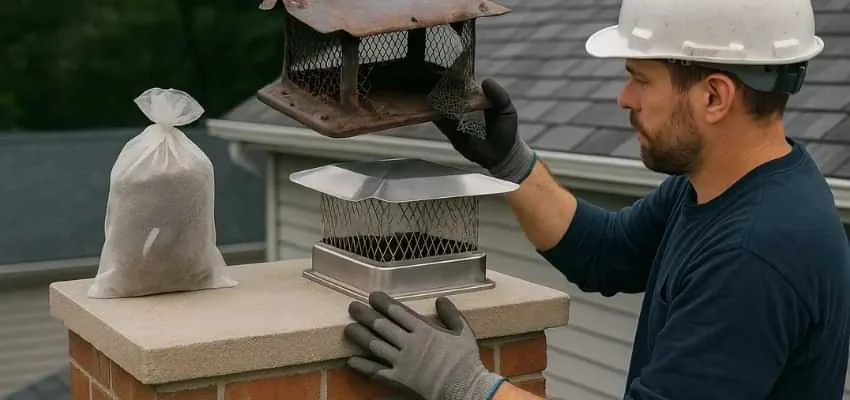
Size, metal and access are the main factors. A standard single-flue cap is quicker and simpler than a full-width cover made for a chimney with several flues, and custom chase covers are fabricated to the exact dimensions of the chase. Stainless steel and copper cost more than galvanized steel but tend to last longer. Roof height and pitch affect how long the setup takes. Extras such as a new storm collar, crown sealing or repairs found under the old cover add to the total. A written quote for chimney cover installation should list the material, the size and what happens to the old cover.
A common guideline is to have a chimney inspected once a year, and many homeowners schedule it before the colder months when the fireplace sees more use. Yearly checks catch small problems such as a loosening cap, a new crack in the crown or a worn mortar joint before they let water in. It also makes sense to have the chimney looked at after a major storm, a chimney fire, a roof replacement or any change of insert, stove or appliance. Chimneys that are rarely used still need checking, because weather damages them whether or not you light fires.
Mostly no: the useful homeowner jobs happen on the ground, not on the roof. Spotting problems early is genuinely valuable, whether that means snapping photos of the chimney top after storms, shining a flashlight at the damper or keeping an eye on the ceiling near the fireplace. Where DIY goes wrong is up top. We regularly undo store-bought sealants smeared over cracks, caps held on with a single screw and mortar patches that trap water. Liner work, flue repairs and gas appliance venting have safety consequences inside the home, so those belong with trained technicians from start to finish.
For the first few storms, check the places where water used to show up: the ceiling near the chimney, the firebox floor, the damper and the siding below a chase. They should stay dry. From the yard, the cover should look level and tight, without gaps along the edges. Listen for any rattle on windy days, which suggests a loose fastener. If you burn wood, have the mesh looked at during the yearly sweep so it does not clog. Homeowners who just finished a “chimney cover replacement” project should keep the receipt with the material and size noted for future reference.
Local crews know the chimneys in the area, and that knowledge saves time and guesswork. Working the same streets season after season, we learn which subdivisions have tall chimneys on steep roofs, which builders used flat chase covers that rust and which older districts still have original clay liners. That history makes the first diagnosis faster and quotes more accurate. Being close by also means we can come back to check a repair after heavy rain without it becoming a major trip. When you call Chimney Sweep Mission, you reach people who work on chimneys around Mission every week.
Whether you want to book now or just gather information first, we are glad to help. Ask your questions about chimney cover installation, your chimney or the timing that suits you. Contact Chimney Sweep Mission for homes across Mission.
Flue last swept long ago? Chimney Cleaning in Mission
Chimney Sweep visits that leave Mission living rooms clean
What's included in Chimney Sweep Services around Mission?
What Fireplace Experts check in your Mission chimney
Logs lifted, embers reset: Gas Fireplace Cleaning near Mission
Yearly Gas Fireplace Maintenance in Mission, before the cold arrives